2015년 11월 24일 화요일

One World Langauge


             Do you know how many spoken languages exist? Surprisingly, there are about 7,000 languages in the world. While there are so many unexpected languages, it is estimated that one language dies every 14 days, showing the severe danger of cultural loss. Even though groups like Canadian organization named First Voice make hard efforts to prevent this serious problem, spending too much times on saving numerous numbers of indigenous languages are somewhat time wasting. Therefore, it will be better to choose one global language for a wide and fast communication, for improvement in global economy and also for creation of equality among different ethnics.

             First, one of the greatest benefit of one world language is that it will definitely bring feasible and fast communication among people who speak different languages. To be specific, if there will be one global language, people will feel comfortability and this will be a big improvement in their lifetime. For examples, people with differently spoken languages will experience more active conference during business meetings without any misunderstandings during their conversations. From one globalized language, there could be a better sufficient result than spoken in several languages. Not only this, but there are more examples that fit into this topic. Hence, it is clear that one globalized language bring more benefits, probably bringing better results, rather than keep speaking in several languages.

             Moreover, deciding one global language can also cause the improvement in economy rise from accepting elites with diverse nationalities. According to the book named,  “The Post-American World” written by Fareed Zakaria, he states that America has received many economy benefits especially from Indians, who takes bigger part in the development of nation, and this eventually become a true fact. Since Indians are learned to speak bi-lingual, including English, and the fact that Indians have higher IQ and working abilities than other ethnics is scientifically proven, so it is a reasonable theory. Hence, making one official language will be more practical for every nationalities, and this will definitely bring benefits or development globally in every fields.
<The author of "The Post-American World">

At last, speaking in one global language can likely create equality and peace among different ethnics. To be more specific, one official language can decrease the conflicts of racism and stereotypes. For instance, in the movie “Crash” there is a scene where Persian store owner and Mexican-American locksmith argue with each other because the store owner is not fluent in English, and most significantly, the Persian store owner treats badly and insults the locksmith because of the stereotype. Specifically, the store owner says that locksmith is trying to deceive the owner in order to receive more money, which is not true. Eventually, the store owner does not believe what the locksmith says so his store got stolen, and he blamed all he faults to the locksmith, increasing more conflict between two different ethnics. By looking at this example, it shows that speaking in several languages is an obstacle that prevents that acceptance of cultural diversity among people, so choosing one global language will be a better solution.
<Movie "Crash">

In conclusion, there are more benefits if we keep only one dominant world language rather than sustaining numerous numbers of languages. People with diverse ethnics and different cultural backgrounds can have wide and fast communication, one globalized language can definitely bring economy or further more global development, and also speaking in one language can cause the equality among different ethnics, decreasing the racial discrimination and hatreds with each other. Sustaining several languages can possibly a way of keeping cultures. However, I personally think that future development is also a significant object to be improved, so I strongly state that one official language is a reasonable idea.


2015년 11월 10일 화요일

Essay #1(rewrite)


Sun Woo Kim

Prof. Kyle Brebner

IERW (4)

7 October 2015
Positive and Negative Effects of the Elimination of the Suneung Exam
             The first Thursday in November is probably the most important and nervous event for every third year high school student and even for their guardians in Korea. That day is the Suneung, one day exam for university admissions. Since the score of this exam determines the future of the examinees, students have prepared and studied for most of their high school lives, even losing sleep, to take this exam. However, let’s imagine this. What if the Suneung exam disappeared in Korea? It would be very delightful news to students because they would not need to worry or get stressed about this one day test for rest of their lives. If the Suneung exam were gone forever, only documents based on what students have participated in during their high school years would be evaluated for university admissions and this can naturally bring some positive and negative effects.
           First, one of the positive effects of changing Suneung system to student document examination is that students will get more chances to participate in diverse fields rather than just spending time studying. To be specific, students might need to fill their curriculums by participating in several activities such as sports, volunteer activities, language certificates, and achievement awards, and this will be a great chance for students to find their hidden abilities or interests. One of the unfortunate facts about Korea’s indoctrination, a forcing education method without specifically understanding it, is that it is limiting every students’ potential abilities. No matter what students want to study or interested in, the Korea education system is only providing courses which consider as “important” and mandatory subjects like Korean language and math. Thus, this limited teaching of few subjects causes students the dissatisfaction of their own university majors and it turns out to be that many university students in Korea drop out of schools to start university entrance admissions again. According to the Chung-Ang Newspaper, it is significantly proved that more than half of university students are not satisfied at either their main major or their campus life. Therefore, changing the Suneung system to evaluating only the documents based on students’ extra curriculums, personal statements, and GPA will be thoroughly enough to examine student’s potential and learning abilities for admission.
             Although students get chances to experience in diverse fields, this can possibly cause negative effects of unfair admissions. To be specific, students who are economically beneficial have higher chances to participate in diverse extra curriculum activities while poor students have limited chances. Eventually, this problem will arouse another serious social issue, an unfair admissions between between rich and poor. As we already know, private education is always the hottest concern for parents in Korea, and this is why the business of hagwon is actively owned in areas such as Daechi and Mokdong. Even though hagwons’ that teach Suneung subjects will be closed, there will be numerous numbers of hagwons be opened for searching information or counseling students in receiving the extra curriculum activities. If this issue really happens, the problem is that not only that there will be no fairness in university admission, but also that students who live wealthy will get higher chances to get admitted in high level colleges while those who don’t have enough money to fill good extra curriculum lists will get lesser chances to get into good colleges. To support this statement, Chung-Ang Newspaper University Evaluation Research reports that about 6 out of 10 examinees slightly noticed that during admission, being less wealthy have some disadvantages in acceptance of the universities. Hence, this example clearly proves that if the Suneung exam is eliminated and university admissions change to only a document examination, there will be a serious unfairness in admission and this problem can show another example of economic inequality in Korean society.
             Overall, when the Suneung exam is gone and a new admission system, an examination of students’ high school documents, is established there will be both positive and negative effects. The positive effect is that students will try out many experiences in different fields and get chances to discover their hidden abilities and interest in that certain field. From this, it will be helpful for students to choose majors related to their future careers. On the other hand, only students from wealthy background will receive more advantages during the process of filling their extra curriculum lists. Thus, this problem will lead another example of unfairness in gap between rich and poor in education field. Since the obsession of academic elitism won’t disappear forever in Korea society, the most suitable solution for this problem is that government or the Ministry of Education should decrease the Private Education by regulations, and create diverse “college entrance type,” such as country-side resident student admission, multi-cultural family child admission and low income family students, that suits for different types of students in order to prove a fair admission.
 

Steve Jobs: The greatest innovator


             Steve Jobs is probably one of the most well-known and admired CEO in a worldwide. His achievement of building his career as a successful businessman definitely gave strong impressions to the youngest generation. Then let’s question to ourselves. Why do you think that Steve Jobs is the most influential and respected man among others? There are other renowned public faces such as Bill Gates, President Barack Obama, Mark Zuckerberg etc, who are also respected, but still Steve Job is always ranked first place for the “Greatest Business Leaders of all time.” Without pondering it, Steve Jobs deserves high recognition than any other successfully renowned CEO’s because of his cutting-edge inventions and his outstanding leadership.

             To begin with, Steve Jobs deserves high recognition because he obviously invented technologies that brought revolutionary innovation in our century. To be specific, he had created unprecedented tools that have never been expected or seemed to be possible, which impressed the world. When Apple released the 1st iPhone generation in January 2007, people were in fact not motivated, and said the device was “obsolete.” Even though the first start of iPhone business was not really successful, Steve Jobs eagerly devoted his efforts, developing the iPhone into more delicate and portable device. After the time passes, Steve Jobs finally announced the new feature of iPhone, a high-technology device that is worked by multi-touch screen, in 2011 and the result came out that new version of iPhone was sold twice as the original version. Eventually, his continuous study and marketing had led to create one of the most selling smart phone in a world, and even for Apple Company to become the center in technology field.  

             Moreover, his potential and charismatic personality as a leader is one crucial factor that highlighted his recognition. We may expect that Jobs had always stepped successful path, but in reality, he had faced lots of difficulties and failures which affected his career. First, Steve Jobs was adopted and raised in a poor family, so he had very limited chance of receiving more education or financial supports from his family. In fact, he actually dropped off the university and started his own business by himself. Unlike successful CEO like Bill Gates who was raised in wealthy lawyer family, Steve Jobs had to build his own career all of by himself, which definitely made him more stronger and independent leader. Moreover, as a big example, Steve Jobs was fired in his own company by his co-workers. This was a tremendous breakdown to Steve Jobs because he felt extreme shame and betrayal from his people, who did not like Jobs’s stubborn and dictated personality. Although Steve Jobs was kicked out in his own company, he later on returned to Apple again after his new start in his new business with new co-workers in a new environment. Because Steve Jobs had brought successful and prominent result in his new business, he was once again get recognition in business field and was called back again to Apple. Hence, his patience, passion and tenacity toward his dream were keys to his success.

             Overall, it is clear fact that Steven Jobs works and his innate personality has gradually distinguished him as a recognizable figure. His revolutionary inventions brought new change in modern world and it became possible to live in more comfortable and protected society by using this high-tech devices. In addition, his eager passion and continuous challenges even at unfortunate situation were crucial factors of his success. In point of fact, Steve Jobs probably deserves to get more praises from other successful businessmen, because he had done all of his works by himself even in a difficult environment. By looking at these characteristics, there is no doubt that he is called the “genius of the century.”
 
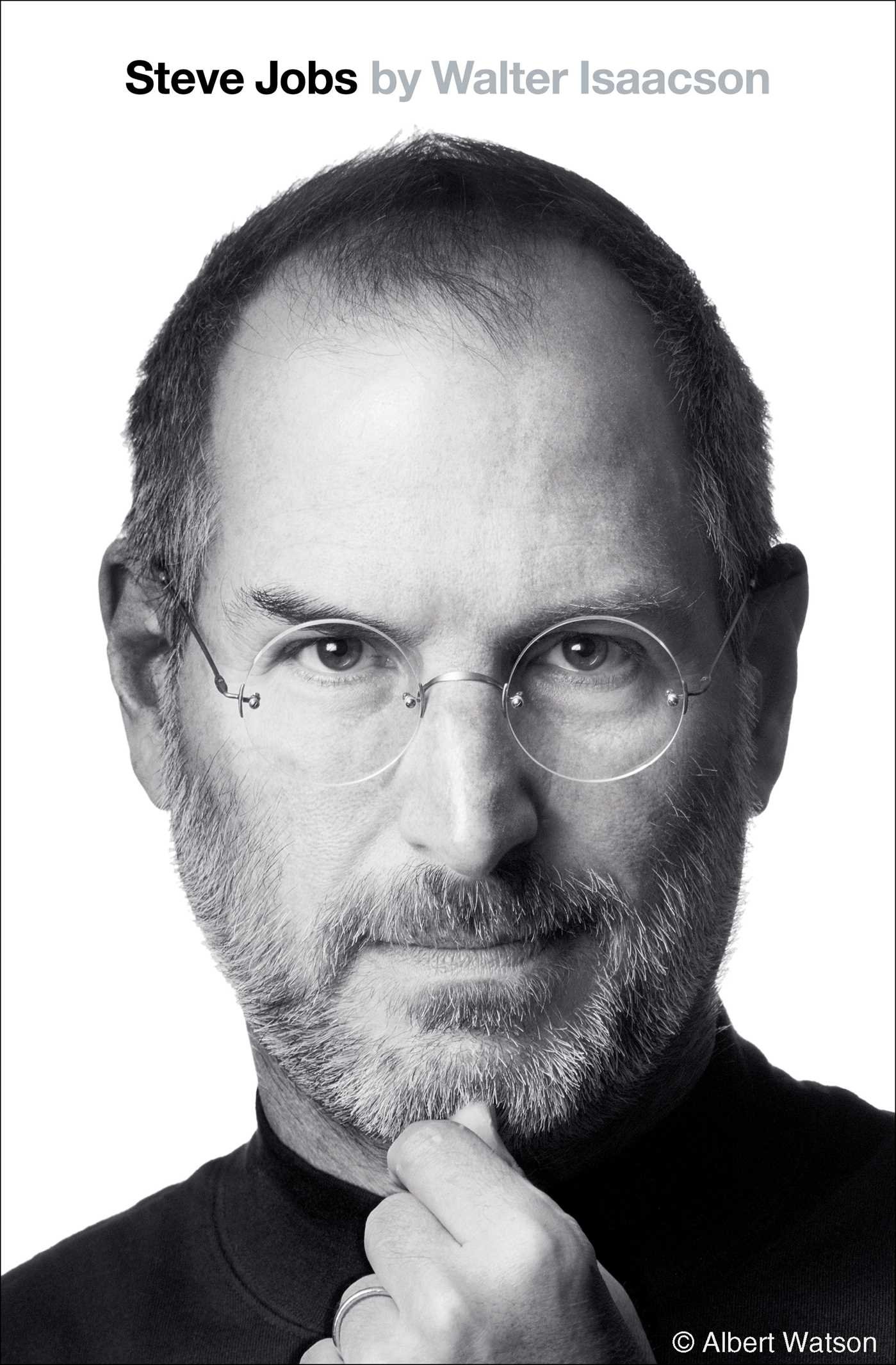
<Photo of Steve Jobs>


<Steve Job's 2005 Stanford Commencement Address (impressive speech!)> 
https://www.youtube.com/watch?v=UF8uR6Z6KLc